
Drone Research Project
Robot for Power Line Inspections
Automated data collection system for transmission power line inspection using UAVs for a more reliable and safer electric transmission network
About the Project
Robot for Power Line Inspections
Automated Data Collection System for Transmission Power Line Inspection Using UAVs
Project Funding
This project is co-financed from the state budget by the Technology agency of the Czech Republic under the THETA Progamme.

Project Partners
Main Partner: AgentFly Technologies s.r.o.
Partners: ČEPS, a.s.; Eyedea Recognition s.r.o.; Fly4Future s.r.o.


Project Details
Call for Proposals: THÉTA 4 (STA02021TK040)
Contest Type: VS – Public tender
Contract ID: TK04020220
Time Period: 01/2022 – 12/2024
Regular inspection of electric transmission network elements is fundamental for the timely detection of defects. Currently, inspections are performed using a helicopter. Defects are identified by an onboard expert during flight or by using video recordings afterwards. Using a helicopter for inspections presents various problems, e.g., safety, data standardization, and output data quality.
The goal of the Inspel project, which is co-financed from the state budget by the Technology agency of the Czech Republic under the THETA Progamme, is to develop a system using unmanned aerial vehicles equipped with onboard sensors, control algorithms, and an image processing system. This will allow the replacement of the regularly planned aerial inspection of power lines, which is currently operated using a helicopter.
The task of the Fly4Future team in the project is the design and development of software for the autonomous control of the movement of unmanned vehicles, the verification of partial technologies in simulation, and real experiments.
The system allows for automating data collection. The impacts of a new solution include lower costs, improved quality of aerial data acquisition, and improved evaluation. The new solution will lead to improved reliability and safety of the electric transmission network.
The currently presented project could be used in the future for multi-robotic inspection of power lines using an operator interface, in which the responsible person would mark out the inspection locations and have the display of current data from the sensors available. This will significantly speed up checks on the lines and, above all, it will be possible to use the drone system for unplanned inspections in the event of accidents, which is not possible now.
See the Project Outcomes
Software for automatic UAV flight control for visual data collection in transmission power lines inspection.

AeroSTREAM
AeroSTREAM: Strengthening Research and Innovation Excellence in Autonomous Aerial Systems

AI Flying Robot for Safe Capture of Unauthorized Drones
EU co-funded project aiming to create AI-equipped flying robot for safe capture of unauthorized drones in protected space

Autonomous Air and Ground Robots

Autonomous Solar Park Maintenance
System for automated monitoring and maintenance of solar parks employing artificial intelligence and unmanned aerial platforms.
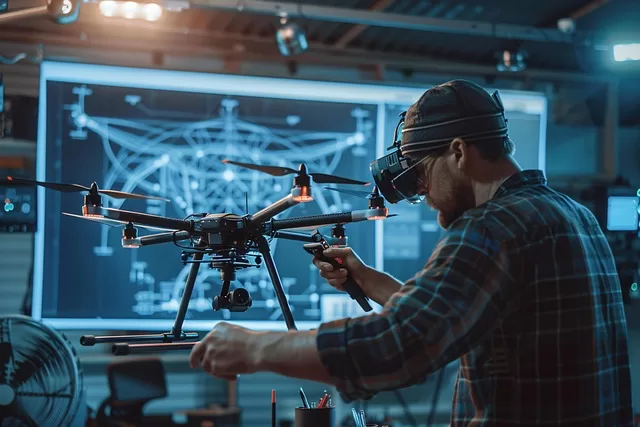
We Help You to Establish Flying Robots’ Research/Lab
From modular drones to tailored software and field-tested platforms, we help you build and scale your research in autonomous flying systems.
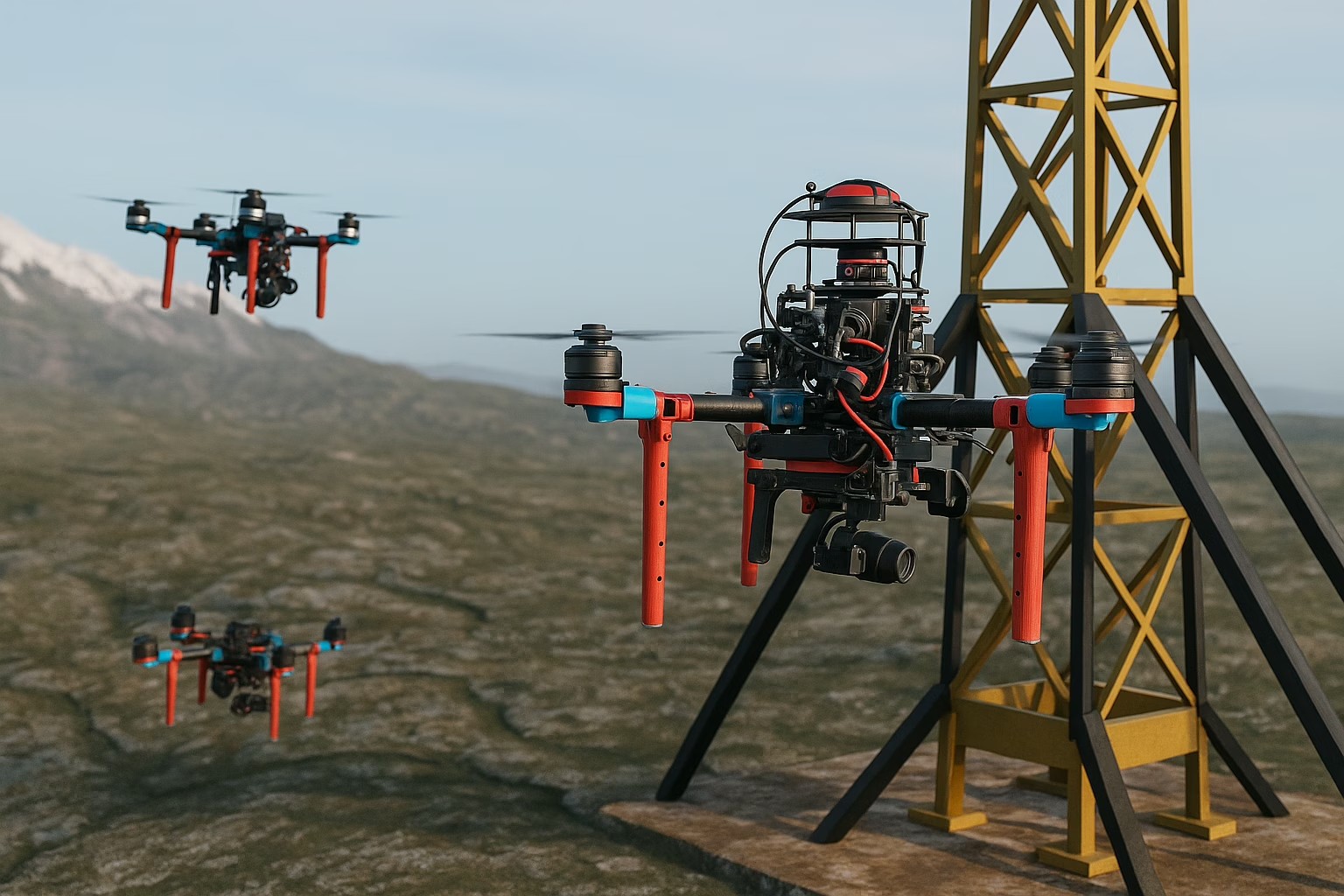
Multi-Robot Aerial System for Autonomous Surveillance and Inspection
Multi-robot aerial system for autonomous surveillance and inspection of large industrial complexes resistant to communication and GNSS signal failures.