
Drone Research Project
Autonomous Solar Park Maintenance
System for automated monitoring and maintenance of solar parks employing artificial intelligence and unmanned aerial platforms.
Application
Autonomous Solar Park Maintenance
Photovoltaic power plants play a crucial role in the global energy transition, but their efficiency depends heavily on continuous monitoring and timely maintenance. A single damaged or dirty panel can reduce energy output across an entire array, making early fault detection essential for large-scale solar farms as well as smaller distributed installations.
Conventional inspection methods are largely manual or semi-automated, requiring technicians to operate drones or use handheld thermal cameras. These approaches are time-consuming, expensive and limited in coverage. They also rely on human interpretation of data, which often delays diagnostics and increases the risk of undetected faults.
Environmental conditions such as high temperatures, dust, or uneven terrain add further complexity. Regular cleaning and inspection are critical but difficult to coordinate efficiently. Without automation, maintenance schedules are reactive rather than predictive, leading to avoidable downtime and long-term performance degradation.

Solution
The system introduces a fully autonomous approach to monitoring and maintaining photovoltaic power plants. It combines advanced drone technology with artificial intelligence to automate inspections, diagnostics and cleaning. Equipped with high-resolution visual and thermal sensors, the drones detect dust, cracks or damaged modules in real time, identifying performance issues before they affect energy output.
A dedicated cleaning drone complements the inspection process by performing targeted maintenance only where needed. This smart coordination minimizes water and energy use while keeping panels in optimal condition. The entire fleet operates autonomously, guided by an adaptive mission planner that adjusts flight routes based on site layout, weather conditions and detected faults.
All components are integrated into a secure digital platform that processes and stores collected data for predictive maintenance. AI algorithms analyze performance trends, prioritize interventions and automatically generate maintenance schedules. The result is a sustainable, cost-effective system that improves long-term reliability and strengthens the efficiency and competitiveness of solar energy infrastructure.

Project Funding
This project is co-financed from the state budget by the Technology agency of the Czech Republic under the THETA Progamme – funding programme for applied research and innovation.

Project Partners
Partners: VZÚ Plzeň
Project Details
Project ID: TS02020034
Programme: THÉTA 2 System for automated monitoring and maintenance of solar parks employing artificial intelligence and unmanned aerial platforms.
Time Period: 07/2025 – 6/2028
AeroSTREAM
AeroSTREAM: Strengthening Research and Innovation Excellence in Autonomous Aerial Systems

AI Flying Robot for Safe Capture of Unauthorized Drones
EU co-funded project aiming to create AI-equipped flying robot for safe capture of unauthorized drones in protected space

Autonomous Air and Ground Robots
We Help You to Establish Flying Robots’ Research/Lab
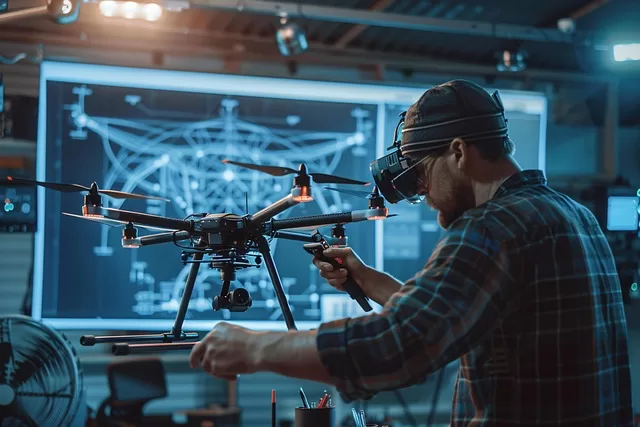
From modular drones to tailored software and field-tested platforms, we help you build and scale your research in autonomous flying systems.
Multi-Robot Aerial System for Autonomous Surveillance and Inspection
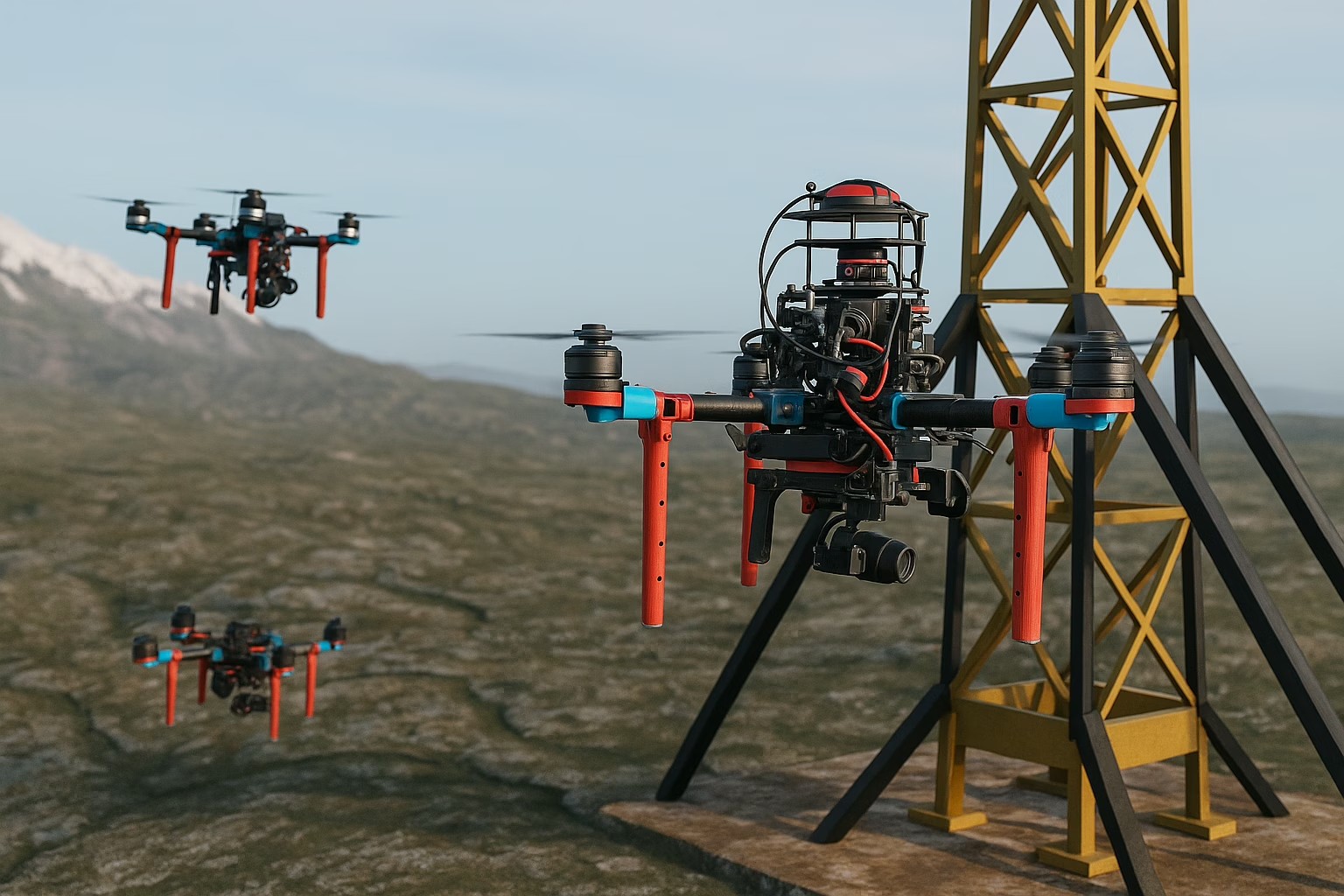
Multi-robot aerial system for autonomous surveillance and inspection of large industrial complexes resistant to communication and GNSS signal failures.
Drone Delivery
Research project focusing on supporting implementation of urban air mobility for parcel delivery.